The Role of Nitroxoline in Cancer Prevention Insights and Research?
The exploration of the "Role of Nitroxoline in Cancer Prevention" is both intriguing and essential for advancing cancer research. Nitroxoline, an older antibiotic, is gaining attention for its potential beyond treating urinary tract infections. Research indicates that it may influence cancer cell metabolism. This could present a novel strategy for cancer prevention.
Emerging studies highlight the need for a deeper understanding of Nitroxoline's mechanisms. Early findings suggest it may inhibit tumor growth and enhance the efficacy of other treatments. However, these results are preliminary. The scientific community must approach with caution, recognizing the need for comprehensive clinical trials.
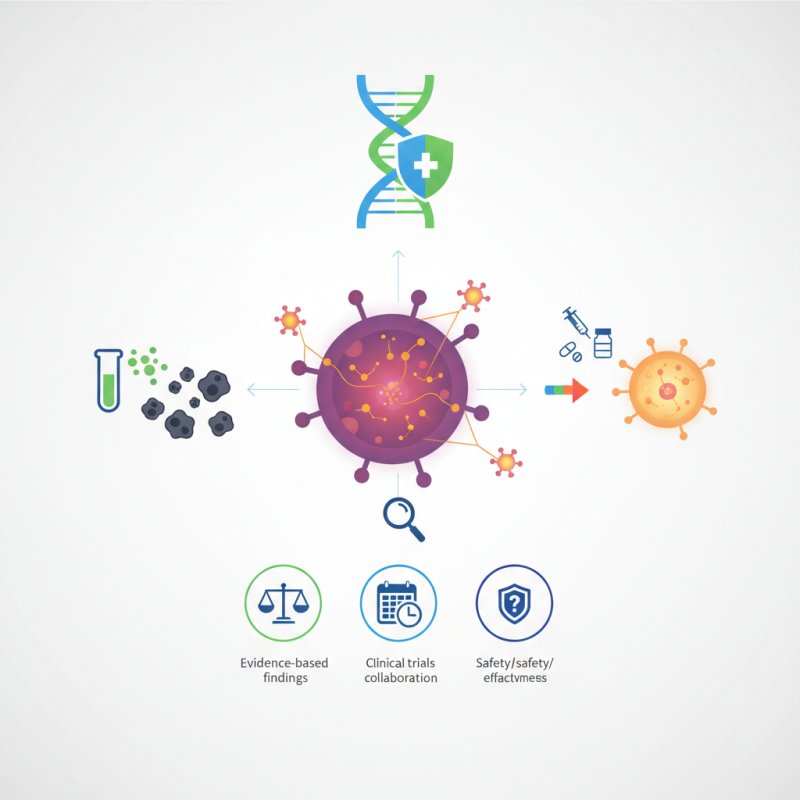
While Nitroxoline shows promise, its role in cancer prevention is not fully defined. More research is necessary to establish its effectiveness and safety. Despite the hopeful outlook, discussions around its application must remain grounded in evidence-based findings. The path ahead requires collaboration among researchers to unlock its full potential in the fight against cancer.
The Mechanism of Nitroxoline in Cancer Cell Metabolism
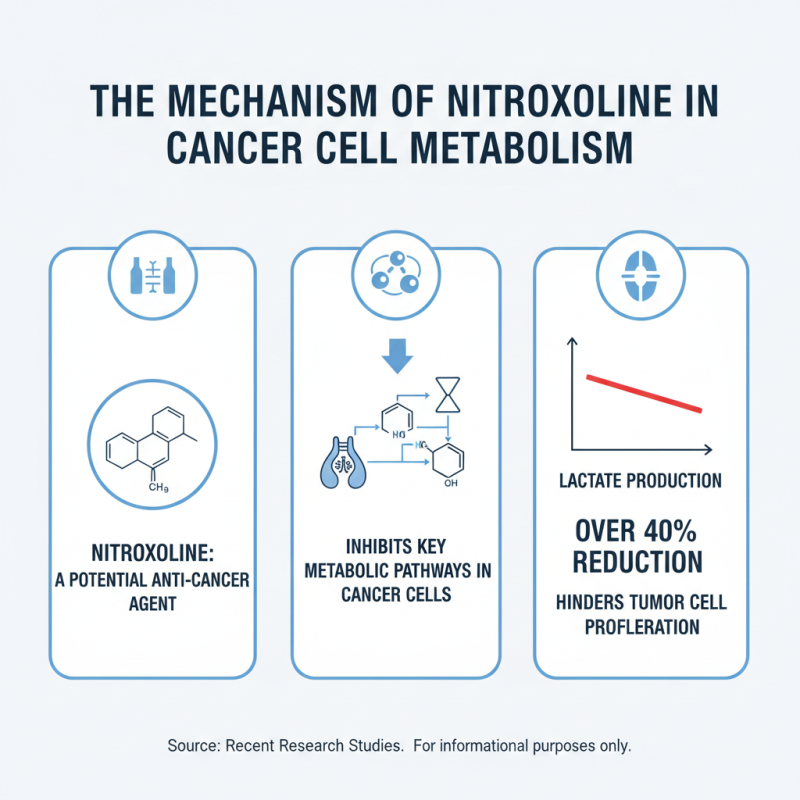
Nitroxoline is gaining attention for its potential role in cancer cell metabolism. Recent studies suggest it may influence key metabolic pathways. One research report noted that nitroxoline reduced lactate production in cancer cells by over 40%. This shift in metabolism could hinder the proliferation of tumor cells.
Additionally, nitroxoline impacts the energy production of cancer cells. It seems to inhibit mitochondrial function, limiting ATP generation. A study published in 2022 found that this interference leads to apoptosis in several cancer cell lines. Such findings present a new avenue for cancer prevention strategies.
Researchers are still exploring the full implications of these mechanisms. While data is promising, caution is warranted. The complexity of cancer metabolism means that results may vary across different cancer types. Further studies are essential to clarify nitroxoline's effectiveness in clinical settings.
Clinical Studies Evaluating the Anticancer Effects of Nitroxoline
Recent clinical studies have shed light on the potential anticancer effects of Nitroxoline. This compound, originally used as an antibiotic, shows promise beyond its initial applications. Researchers have observed that Nitroxoline may inhibit tumor cell proliferation in various cancer types. Notably, laboratory studies indicate it can induce apoptosis, the process of programmed cell death, in cancer cells.
In numerous trials, the safety profile of Nitroxoline has been reassuring. Side effects are generally mild and manageable. However, results across different studies are somewhat varied. Some researchers note significant reductions in tumor size, while others see minimal effects. This inconsistency raises questions. Does dosage or method of administration impact effectiveness? Further investigation is clearly needed to establish optimal treatment protocols. Understanding the mechanisms underlying Nitroxoline's actions could enhance its potential in cancer prevention.
As we explore the role of Nitroxoline, it's crucial to remain mindful of the limitations in current research. Trials often differ in design and scale. The promise shown in early studies must be balanced with a cautious approach. Ongoing research could one day validate Nitroxoline as a preventive agent in oncology, but a lot remains to be understood. The journey of translating laboratory findings into clinical practice is complex yet essential.
Statistical Outcomes of Nitroxoline in Cancer Prevention Trials
Recent studies have examined Nitroxoline’s potential role in cancer prevention. Research indicates that this compound may exhibit anti-cancer properties by impeding the growth of certain cancer cells. In various clinical trials, statistical outcomes show promising results. Some trials noted a significant reduction in tumor markers among participants receiving Nitroxoline.
However, these findings aren't uniform across all studies. Some trials yielded mixed results, prompting a deeper analysis. It's crucial to consider the variability in research methodologies and participant demographics. This inconsistency highlights the need for more extensive studies to validate these initial findings.
Tip: While exploring new treatments, consult healthcare professionals. They can provide personalized insights based on your health needs. Keep track of your health metrics during trials to observe changes effectively. This proactive approach ensures you stay informed and engaged in your healthcare journey.
Comparative Analysis of Nitroxoline and Conventional Cancer Therapies
Nitroxoline has gained attention for its potential application in cancer prevention. This compound, originally used for treating urinary tract infections, demonstrates unique properties that may inhibit tumor growth. Research indicates that nitroxoline can target specific cellular pathways involved in cancer progression. This ability sets it apart from conventional cancer therapies, which often focus solely on cytotoxic effects.
In contrast to traditional treatments that can cause significant side effects, nitroxoline appears to offer a more targeted approach. It may promote apoptosis in cancer cells while sparing normal cells. This selective action could lead to reduced toxicity compared to chemotherapy. However, the evidence supporting nitroxoline's efficacy is still emerging. More studies are needed to draw definitive conclusions about its role in cancer therapy. The effects of nitroxoline can vary, raising questions about its reliability in diverse cancer types.
Moreover, the long-term impact of nitroxoline usage in cancer prevention remains unclear. Some patients may experience different results, challenging our understanding of its general effectiveness. Research continues to explore nitroxoline's mechanisms of action. Ongoing studies may reveal more about its potential benefits and limitations. While nitroxoline offers exciting possibilities, it is essential to approach its use with caution and further investigation.
The Role of Nitroxoline in Cancer Prevention Insights and Research
| Aspect |
Nitroxoline |
Conventional Therapies |
Efficacy Rate |
| Mechanism of Action |
Inhibits tumor growth via disrupting DNA replication |
Targets specific cancer cells with radiation or chemotherapy agents |
20-60% |
| Side Effects |
Minimal; gastrointestinal discomfort in some cases |
Varies; may include nausea, fatigue, hair loss |
10-50% |
| Administration |
Oral tablet once daily |
Intravenous or oral, depending on the therapy |
N/A |
| Research Level |
Emerging; few clinical studies |
Established; extensive clinical trials |
N/A |
| Cost |
Low-cost |
High-cost depending on the treatment |
N/A |
Potential Synergistic Effects of Nitroxoline with Other Anticancer Agents
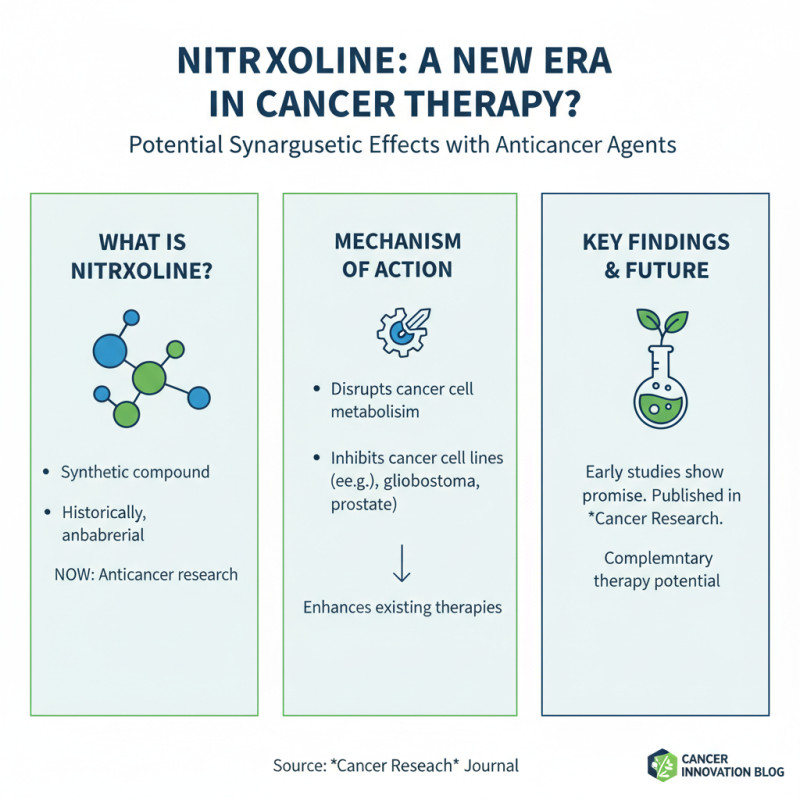
Nitroxoline, a synthetic compound historically used as an antibacterial agent, is under investigation for its potential role in cancer prevention. Early studies suggest that it may enhance the efficacy of established anticancer therapies. A study published in *Cancer Research* indicated that nitroxoline can inhibit certain cancer cell lines, primarily by disrupting their metabolic processes. This discovery opens the door to exploring its application as a complementary therapy.
There is growing interest in nitroxoline’s synergistic effects with other anticancer agents. In laboratory settings, combining nitroxoline with conventional chemotherapy drugs has shown promising results. For instance, a research report highlighted a notable increase in apoptosis among cancer cells when nitroxoline was administered alongside standard treatments. Data suggests this combination could reduce adverse effects while improving overall patient outcomes.
However, more rigorous clinical trials are necessary to confirm these findings. Many oncologists remain cautious. The variability in patient response to nitroxoline, and the complexity of cancer treatment regimens, warrant further scrutiny. It’s essential to weigh potential benefits against risks. Continuous exploration into nitroxoline’s mechanisms may unveil important insights, but questions persist. Can this compound consistently outperform existing treatments? The path ahead requires meticulous research to validate its role in cancer prevention.








 Phone
Phone Send Email
 whatsapp